

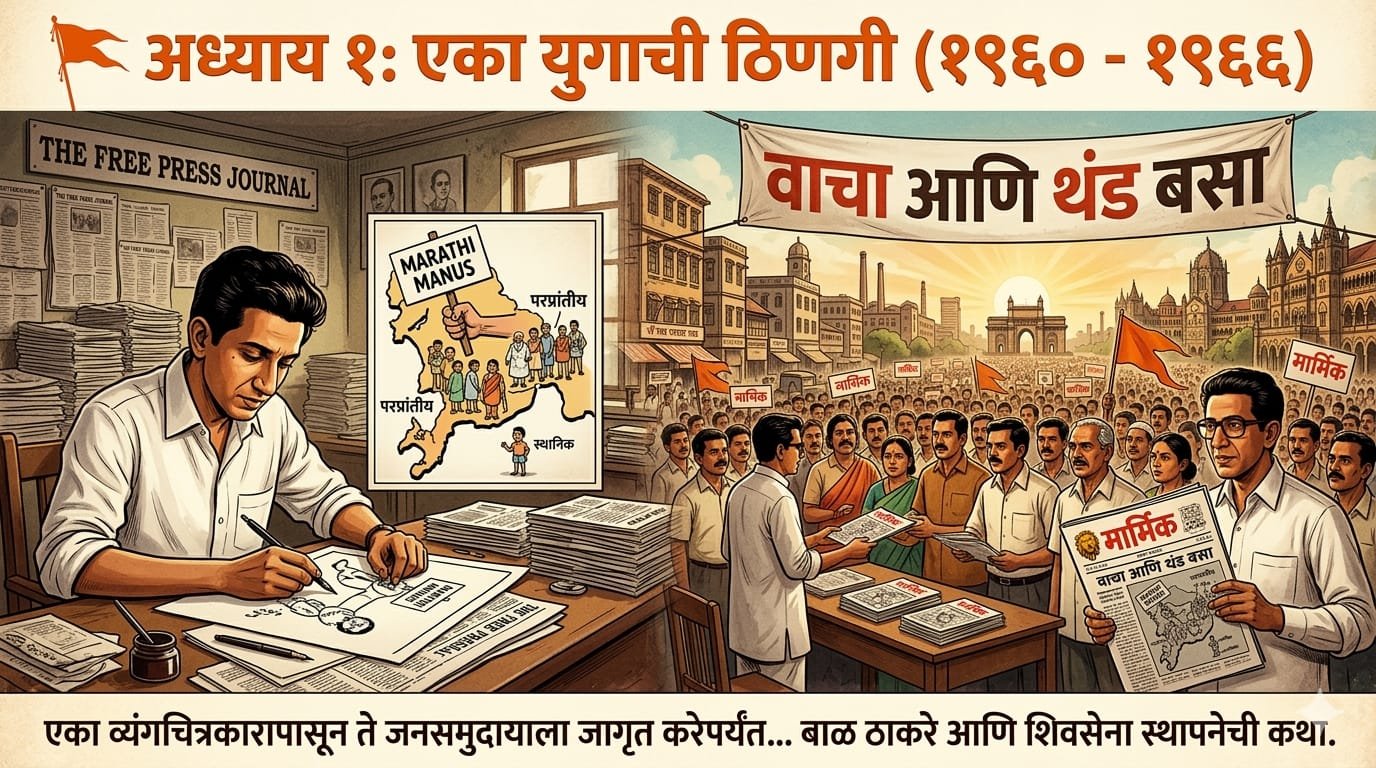

тАЛЁЯЪй Chapter 1: The Spark of an Era (1960 – 1966)
тАЛThe story begins with a cartoonist. Working for The Free Press Journal, Balasaheb Thackeray observed that the local Marathi people were becoming outsiders in their own home, Mumbai. He launched the magazine Marmik, using the slogan “Vacha ani Thanda Basa” (Read and Sit Quietly) to awaken the masses from their slumber.
тАЛKey Milestone: On June 19, 1966, the Shiv Sena was officially founded. The organization’s journey began with the symbolic breaking of a coconut.

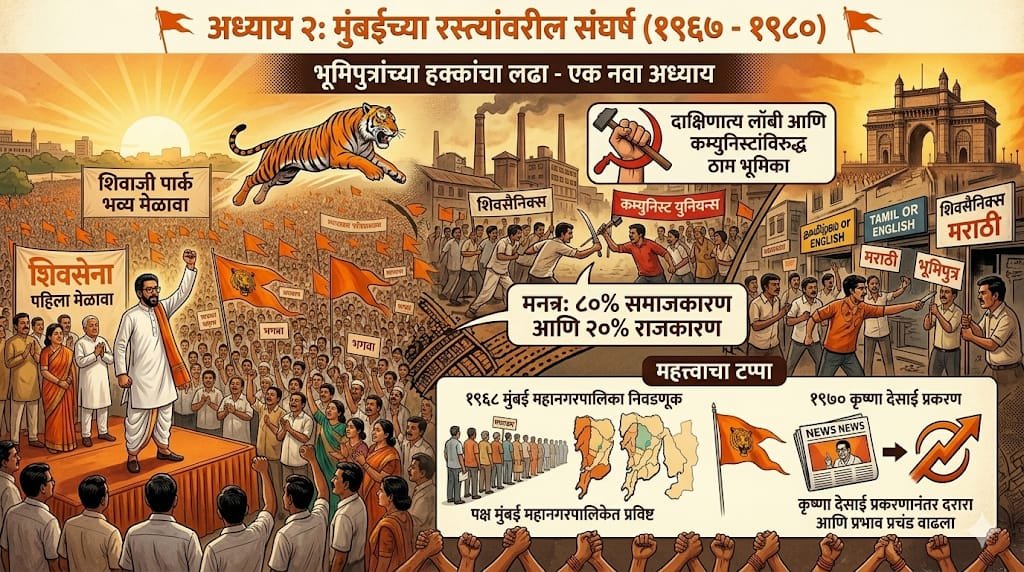
тАЛЁЯЪй Chapter 2: The Struggle on Mumbai’s Streets (1967 – 1980)
тАЛThis era was defined by the rights of the “Bhumiputra” (Sons of the Soil). Balasaheb gave the clarion call of “80% Social Work and 20% Politics.” The Shiv Sena took a stand against South Indian lobbies and powerful Communist unions. The first massive rally at DadarтАЩs Shivaji Park announced to the world that a new “Tiger” was now roaring in Mumbai.
тАЛKey Milestone: In 1968, the party entered the BMC elections. Following the 1970 Krishna Desai case, the fear and influence of the Sena grew exponentially

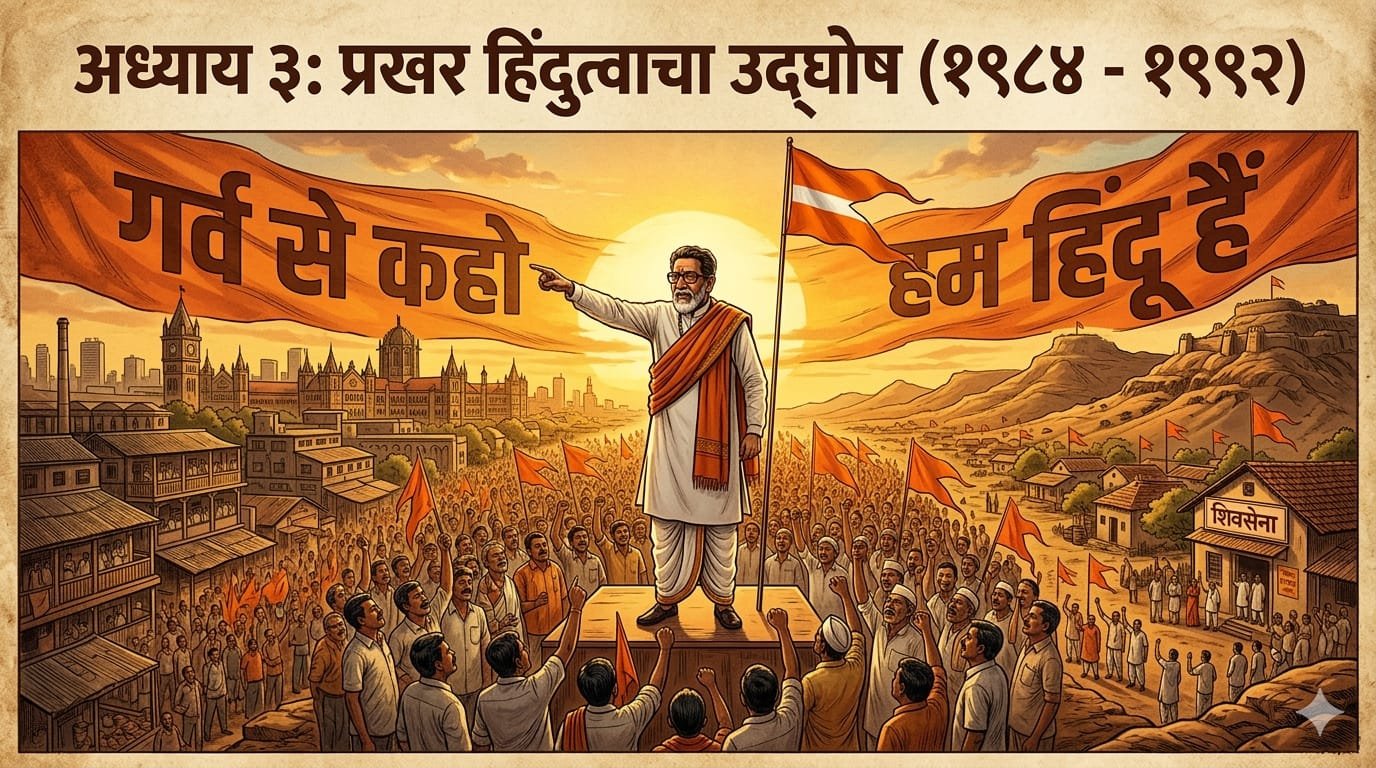
тАЛЁЯЪй Chapter 3: The Proclamation of Hindutva (1984 – 1992)
тАЛBy the 1980s, Balasaheb realized that the Marathi issue alone wasn’t enough to expand. He raised the slogan “Garv se kaho hum Hindu hain” (Say with pride that we are Hindus), which propelled the Shiv Sena into rural Maharashtra.
тАЛKey Milestone: During the 1992 Mumbai riots, the Shiv Sena took on the role of “Protectors of Hindus.” After the Babri Masjid demolition, BalasahebтАЩs fearless statementтАФ”If my Shiv Sainiks did this, I am proud of them”тАФimmortalized him as the ‘Hindu Hriday Samrat’ (Emperor of Hindu Hearts).

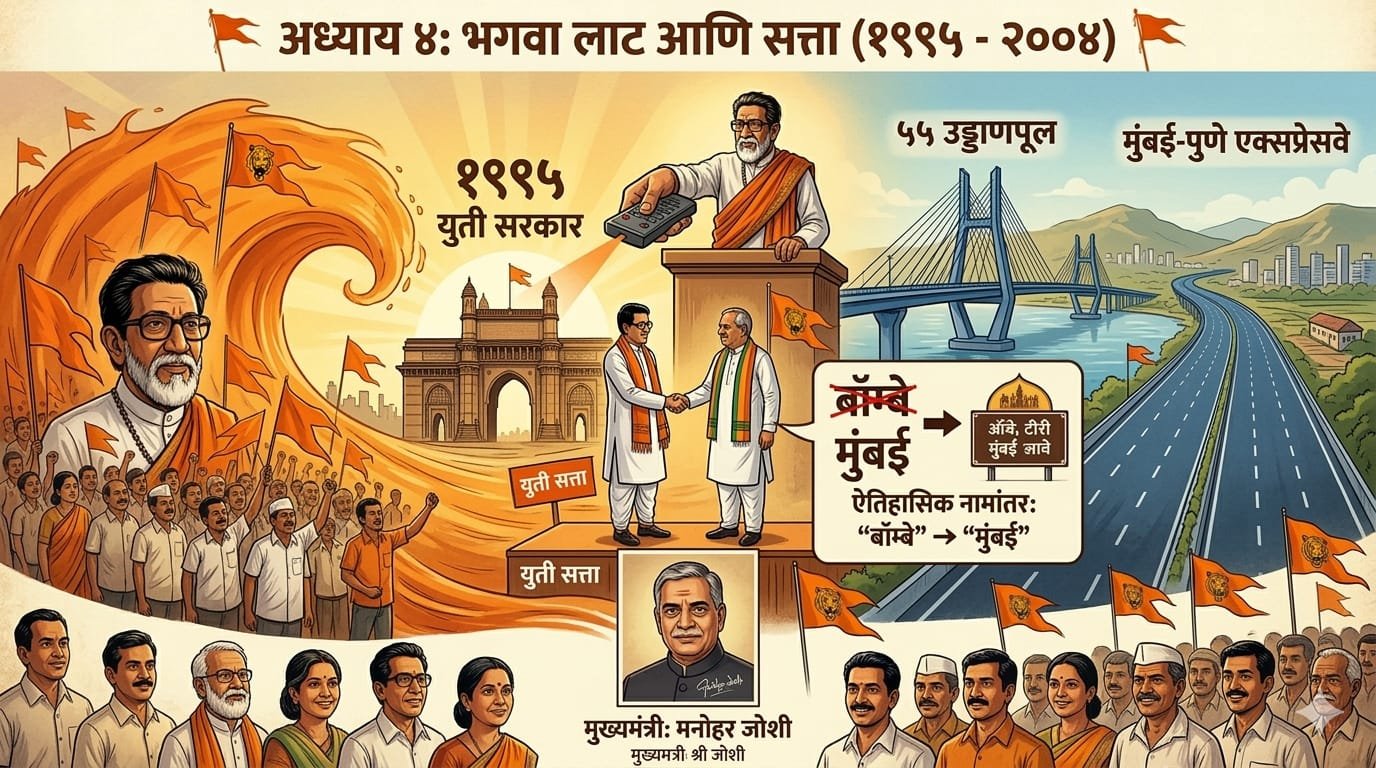
тАЛЁЯЪй Chapter 4: The Saffron Wave and Power (1995 – 2004)
тАЛFor the first time, Maharashtra witnessed a non-Congress government as the Shiv Sena-BJP alliance came to power. Balasaheb famously governed through “Remote Control.”
тАЛKey Milestone: Manohar Joshi became the Chief Minister. This era saw the construction of 55 flyovers in Mumbai, the launch of the Mumbai-Pune Expressway, and the landmark decision to rename ‘Bombay’ to ‘Mumbai.’

тАЛЁЯЪй Chapter 5: Leadership Transition and a Mourning City (2005 – 2012)
тАЛThis was a period of internal shift. Uddhav Thackeray was appointed as the ‘Karyapramukh’ (Executive President). The party faced a major blow when Raj Thackeray left to form his own outfit, but the organization moved forward.
тАЛKey Milestone: November 17, 2012тАФThe passing of Balasaheb Thackeray. All of Mumbai came to a standstill. In a historic display of discipline, millions gathered to bid a peaceful farewell to their leader. It was the end of an era.

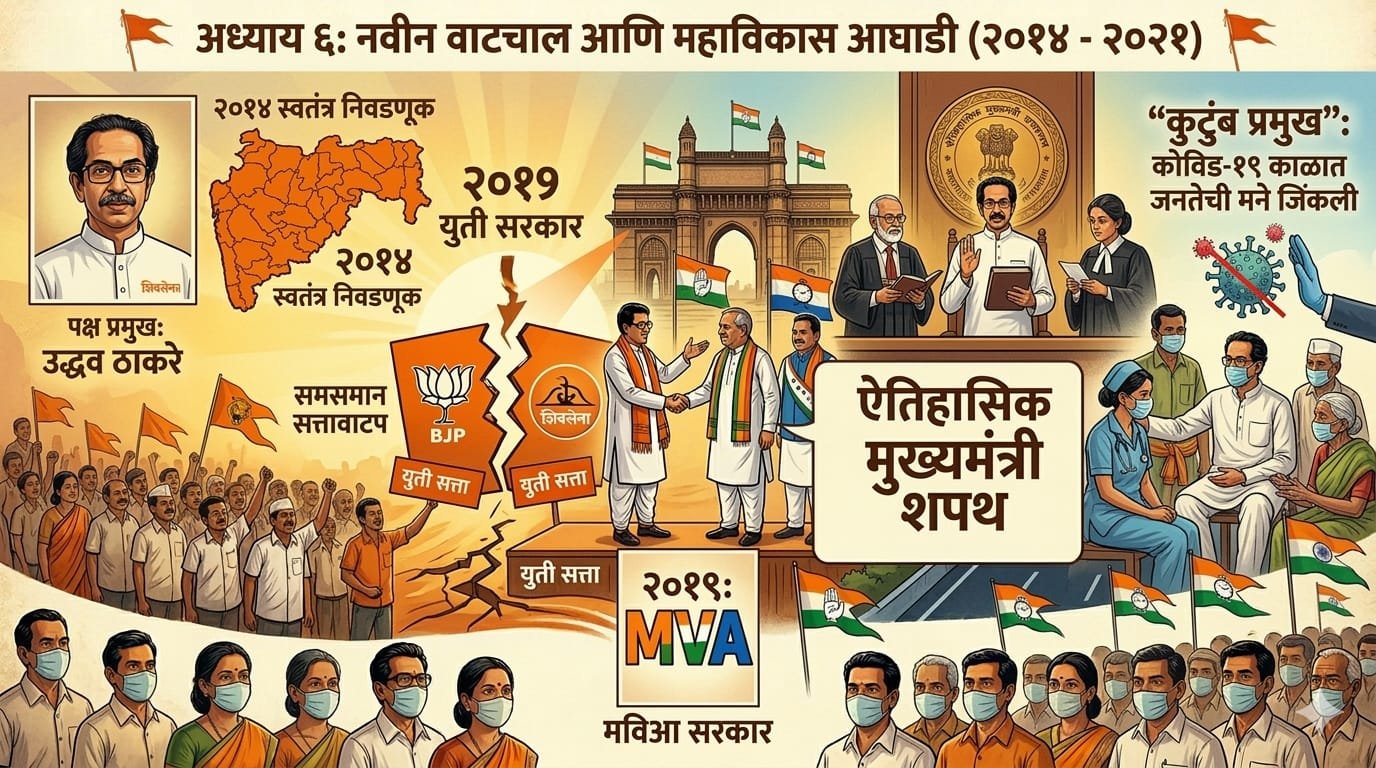
тАЛЁЯЪй Chapter 6: A New Path and the Maha Vikas Aghadi (2014 – 2021)
тАЛUddhav Thackeray took full command of the party. In 2014, the Sena fought alone to prove its strength. By 2019, politics took a sharp turn; over the issue of equal power-sharing, the tie with the BJP broke. Uddhav Thackeray joined forces with the Congress and NCP to form the MVA.
тАЛKey Milestone: Uddhav Thackeray took the oath as Chief Minister. During the COVID-19 pandemic, he won hearts by acting as the “Kutumb Pramukh” (Head of the Family) for the state.

тАЛЁЯЪй Chapter 7: The Struggle and the Flaming Torch (2022 – 2026)
тАЛThis has been the most challenging period in the party’s history. Following a rebellion by Eknath Shinde, the party split. The original name and symbol (Bow and Arrow) were lost in the legal battle. However, true to BalasahebтАЩs wordsтАФ”Shiv Sena never ends”тАФthe movement endured.
тАЛKey Milestone: A new symbol was embracedтАФthe ‘Mashal’ (Flaming Torch). Shiv Sena (UBT) rebuilt from the grassroots, proving in the 2024-2026 elections that the “real” Shiv Sena lives where the Thackeray name and the peopleтАЩs love reside.

SHARE PAGE: